

Australia’s biggest podcast network just moved 150 shows to Steven Bartlett’s Flightcast
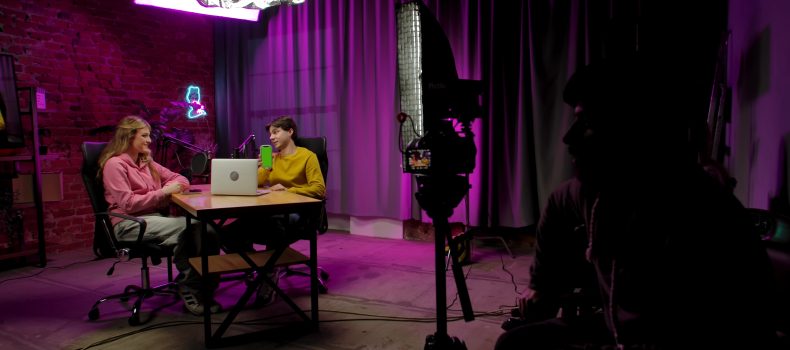
Southern Cross Austereo, Australia’s largest commercial radio company, said on 31 August that its LiSTNR podcast network is moving more than 150 shows onto Flightcast, the video-first hosting and distribution platform co-founded eleven months ago by Steven Bartlett of The Diary of a CEO and the developer Rox Codes. The companies say the agreement makes LiSTNR the largest network on Flightcast anywhere in the world.
Read as a vendor switch, that is routine housekeeping. Read as a signal, it is not. A national broadcaster with 2.8 million signed-in app users has decided its podcast infrastructure should be built around video first and audio second, and it has picked a startup that did not exist two years ago over the incumbent that has served the Australian market for years. Our reading is that this is the clearest evidence so far that the podcast hosting business is quietly being redefined as a video content management business.
What has been confirmed
The deal is announced in SCA’s own media release on the Flightcast partnership, which describes Flightcast as a video-first hosting, distribution and analytics platform and says more than 150 shows are being brought onto it. The stated capability is cross-platform publishing to YouTube, Spotify, Apple Podcasts and RSS from a single dashboard, with AI-driven analytics, clip generation and metadata tools attached.
The same release puts numbers on what LiSTNR brings: 2.8 million signed-in app users and an estimated 10 million monthly reach across the LiSTNR Audience Network. SCA describes itself as Australia’s largest investor in the local podcast industry, and on the evidence of the Australian charts that claim is hard to argue with.
What the release does not say is what LiSTNR is leaving. Podnews reported that the network had been hosted on Triton Digital’s Omny Studio, the Australian-built product that has underpinned much of SCA’s podcast publishing. Neither SCA nor Triton has commented publicly on the change, so treat the incumbent’s identity as trade reporting rather than a confirmed fact. No financial terms were disclosed and no migration timetable was given, which for a move of this size is normal rather than suspicious.
What the companies have said
Sam Cavanagh, head of content for LiSTNR Original Podcasts, framed it as a creator tools decision: “LiSTNR is Australia’s largest investor in our local podcast industry. As podcasting continues to evolve towards video, getting Flightcast in the hands of our creators will help them unlock creativity and growth.”
John Kelly, managing director of audio at Southern Cross Media Group, placed it in a longer arc: “Since launching our digital transformation in 2021, LiSTNR has led the market through continuous innovation across content, AdTech, and platform infrastructure.”
Rox Codes, Flightcast’s chief executive and co-founder, was the most revealing of the three: “Australia is an incredibly important podcast market, and partnering with SCA marks a major step in Flightcast’s international growth.” That is a supplier telling the market what the deal is for. A platform launched in October 2025 on the strength of one enormous show needs an enterprise reference customer before other broadcasters will take its calls, and a national network is exactly that.
The podcast host is becoming a video CMS
The mechanics matter more than the branding. A traditional podcast host takes an audio file, wraps it in an RSS feed and counts the downloads. A video-first host treats the RSS feed as one of several outputs, pushes native uploads to YouTube, cuts vertical clips for social from the same master, and reports on all of it in one place.
For a network, that collapses two workflows into one and, in most cases, one team into one. The likely effect on staffing is not dramatic in the short term, but it does change who is hired next: an editor who can cut for a 16:9 player and a 9:16 feed is worth more to a network on this kind of platform than a second audio producer.
It also hands the network a measurement problem it used to be able to push onto somebody else. Downloads are defined by the IAB and independently certified. YouTube views are defined by YouTube, and YouTube changed that definition on 24 August so that a view is counted from the first frame. Our reading is that any publisher running both from a single dashboard now owns the reconciliation, and buyers will start asking which of the two numbers a rate card is actually built on.
Not everyone thinks the pivot is as settled as the announcements suggest. In the same week, the consultant Eric Nuzum argued that roughly 90 per cent of all podcast consumption is still audio, not video. Both things can be true at once, and that is the awkward part: consumption remains overwhelmingly audio while discovery, clips and a growing share of the advertising money do not. Networks are building for where the attention arrives, not for where it is spent.
That tension is visible in the charts themselves. Bartlett’s own program sits near the top of the business podcasts most people are already listening to, and it is simultaneously one of the largest podcast channels on YouTube. The tools SCA has just bought were built to run exactly that kind of dual-life show, which is the argument for the deal and, if your shows are not built that way, the argument against it.
A bad day for the incumbent
Triton Digital did not spend 31 August quietly. On the same date it announced a partnership with RCS to bring programmatic advertising to over-the-air broadcast radio, letting stations sell traditional airtime through automated, data-driven workflows. Susan Larkin, RCS chief executive, described it as “simply, immediately, new revenue without new complexity”.
Placed side by side, the two announcements read as a map of where each company thinks its growth is. Triton, which is owned by iHeartMedia, is applying podcast-style ad tech to the radio estate. Flightcast is taking podcast infrastructure somewhere radio companies have not built for. That points to a market splitting between vendors defending broadcast revenue and vendors chasing creator workflows, and the two do not compete for the same budget line for much longer.
The prize in Australia is real but modest. IAB Australia’s FY26 internet advertising figures, compiled by PwC, put total audio advertising at A$353 million, up 6.6 per cent, with podcasting at A$40.0 million in the June quarter, up 13.1 per cent year on year and now 40 per cent of all audio spend. Podcasting is the part of Australian audio that is growing, and it is growing faster than the medium around it.
Why this matters outside Australia
For LiSTNR’s own creators, the immediate risk is migration rather than strategy. Moving 150 shows means 150 feed redirects, back catalogs that have to arrive intact, and analytics history that either transfers or does not. Nothing in the announcement addresses any of that, and it is the part listeners will notice first if it goes wrong.
For everyone else, the significance is precedent. Until now, video-first hosting has been sold to individual creators and small studios. A commercial broadcaster of national scale signing up gives every other network permission to run the same tender, and our expectation is that at least one European or North American group tests the market on similar terms before the end of the year.
Listeners are unlikely to see anything change, which is rather the point. The shows on your phone arrive the same way whether the publisher’s back end is built for RSS or for YouTube, and most of the interview podcasts that fill a weekly feed now exist as a video somewhere without their audience ever thinking about it.
The number worth watching is not the show count. It is whether Flightcast publishes IAB-certified download figures for a network of this size, and whether LiSTNR’s own app stays a first-class destination once the publishing dashboard treats YouTube as a peer rather than a syndication target. If the answer to the second question turns out to be no, SCA will have spent five years building an owned audience and then handed its distribution logic to platforms it does not control.
Posted in: All articles