

NPR just signed the biggest tech podcast of the year — and let the hosts keep it
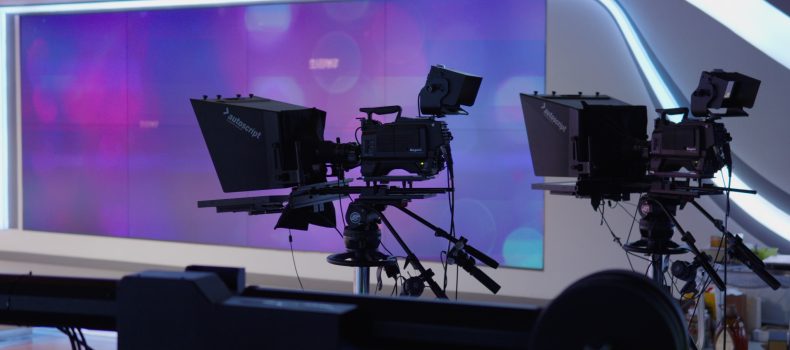
NPR announced on 16 September that Kevin Roose and Casey Newton are bringing their new show, Machine Gods, to the network. It is a video-first program about artificial intelligence, it runs twice a week, it launches in October on the NPR app, YouTube and podcast apps, and from early 2027 it will also be carried on radio across the NPR Member station network. NPR set all of that out in its own announcement.
The names made the headline. The contract is what makes this worth reading twice. NPR has not bought Machine Gods and it has not commissioned it. Roose and Newton own the company that makes it, and what NPR supplies is distribution and advertising sales. For a broadcaster that has spent most of its 56 years commissioning and owning what it puts on air, that is an unfamiliar deal — and it arrives in the first full year NPR has operated without federal support.
What NPR has actually confirmed
The confirmed facts are narrow. Roose, formerly a columnist at The New York Times, and Newton, founder of the newsletter Platformer, will host a show NPR describes as covering “the defining consumer, enterprise and policy conversations of the artificial intelligence era”. It debuts in October on the NPR app, on YouTube and “wherever you get your podcasts”, runs twice weekly on NPR’s podcast feeds, and is produced in San Francisco. Radio carriage follows in early 2027.
It is also the first significant programming acquisition under Nadine Zylstra, who NPR named as its Chief Content Officer on 8 June, arriving from senior programming jobs at Pinterest, YouTube and Sesame Workshop. She called the pair “two of the sharpest, most trusted voices covering the technology shaping our world” and the deal “an exciting, strategic expansion of our digital slate”. She and chief executive Katherine Maher were due to discuss it on stage at the IAB Podcast Upfront on 17 September.
Both hosts were quoted on the record. Roose said partnering with NPR “will let us reach smart, engaged audiences at a scale no tech podcast has ever had”. Newton framed it as a choice against enclosure: “When you build an independent tech publication, there’s always a temptation to retreat behind a paywall or talk exclusively to insiders.”
Those are statements of intent, not results. But Newton’s is the most economically revealing thing either host said. The default route for two well-known journalists leaving a large newspaper is a paid subscription product, because it converts a known audience into revenue fastest. Our reading is that they have taken the opposite bet, and it only pays off if the distributor’s reach is genuinely large.
NPR sells the ads. The hosts keep the company.
The detail that changes the story is not in the press release. Axios reported on the day of the announcement that NPR is handling distribution and advertising sales, and that Machine Gods is the first product of Machine Gods Media, a company Roose and Newton own 50-50. The two weekly episodes split by format — one interview, one news and analysis — and the show is built for YouTube first, distributed as a podcast alongside it.
Zylstra told Axios that NPR is open to arrangements that allow creators to retain their intellectual property. That sentence carries a lot of weight: it describes NPR working less like a commissioner and more like the podcast networks it has historically stood apart from — a sales house and a distribution pipe attached to shows it does not own.
The likely consequence is that NPR is now a bidder alongside Acast, Audacy, SiriusXM and iHeart whenever a well-known host comes free. It cannot match them on cash. What it can offer is a distribution asset none of them has: scheduled carriage across more than 240 member stations, reaching people who will never open a podcast app. Our reading is that this is the currency NPR intends to keep spending.
On the money, nothing is confirmed. Bloomberg’s Ashley Carman reported on 10 September, before the partner was public, that the pair were nearing a deal for their then-untitled show worth up to $5 million a year. Neither NPR nor the hosts have confirmed any figure, the announcement mentions none, and nobody has described the structure behind that number — guarantee, revenue share, production budget. It belongs in the column marked trade reporting, not the one marked fact.
Why a network with an $8 million hole is doing this
NPR’s own newsroom reported the financial position in May. Maher said the network had to close an $8 million gap in a roughly $300 million annual budget, expected $15 million less in member station fees this year and was bracing for weaker corporate sponsorship — all downstream of Congress clawing back the entire $1.1 billion it had committed to public media. Around 30 journalists left through buyouts and layoffs.
In the same period NPR received two private gifts totalling $113 million, the second- and third-largest in its history, most of it earmarked for technological innovation rather than operations. Money that cannot be spent on newsgathering can be spent on apps, platforms and video — precisely the ground a video-first show sits on.
Look at the order of events and a strategy appears. In May, NPR moved Eric Marrapodi off news programming to lead the growth of its video capabilities. In June it hired a Chief Content Officer out of YouTube and Pinterest. In September its first headline signing is a show designed for YouTube. That points to one decision executed in three steps, and suggests more video-native acquisitions sit behind it.
What it changes for creators and for the rest of the business
For anyone building a show independently, this is a template worth studying. The hosts kept the company, the intellectual property and control of the format, and rented what they could not build — a sales operation and a distribution footprint. The likely effect is that the next departing staff journalist with a recognisable name asks for those terms as a starting point rather than a work-for-hire commission.
It also sharpens what a network is really selling. A commercial podcast group chasing a host like Roose or Newton can offer a larger check; NPR offers a smaller one attached to a broadcast schedule and a public-service brand. Which wins will vary show by show, and in a field as crowded as the best technology podcasts already fighting for the same listeners, distribution that reaches people who never go looking for shows may prove worth more than the cash.
There is a real friction on the broadcast side. NPR’s on-air sponsorship is constrained by noncommercial underwriting rules that limit how promotional a message can be; its podcast and YouTube inventory is not. Our reading is that the 2027 radio rollout is the harder half of this deal: the show’s commercial logic lives in video and on-demand audio, and radio carriage is the reach that justifies the price rather than the part that pays for it.
October, and the things nobody has confirmed
The launch window is not accidental. Roose’s book The AGI Chronicles is published on 6 October, the same month the show arrives. He had signalled the plan in June, writing in the post announcing his departure from the Times that he and Newton wanted “to start a company together, and build something we would own”. The last Hard Fork episode under the Times masthead went out in August.
What nobody has confirmed is the money, the length of the term, how advertising revenue splits between NPR and Machine Gods Media, and how many of the 240-plus member stations will clear two hours a week for an AI show in 2027. Stations set their own schedules; national carriage is an offer, not an instruction. That last number is the one to check in the spring, because it is the only hard test of whether the reach NPR sold to these hosts exists in practice.
For listeners the immediate change is simpler: a well-made technology show that sat behind a large newspaper’s brand becomes free, twice weekly and video-first, alongside the daily news podcasts most people already listen to. For the industry, the structure matters more than the show. If a public broadcaster can win a marquee signing by giving away ownership and keeping only distribution and sales, every network will spend 2027 being asked why it still expects to own anything at all.
Posted in: All articles